

Causes and Treatment for Loss of Erection With Condom
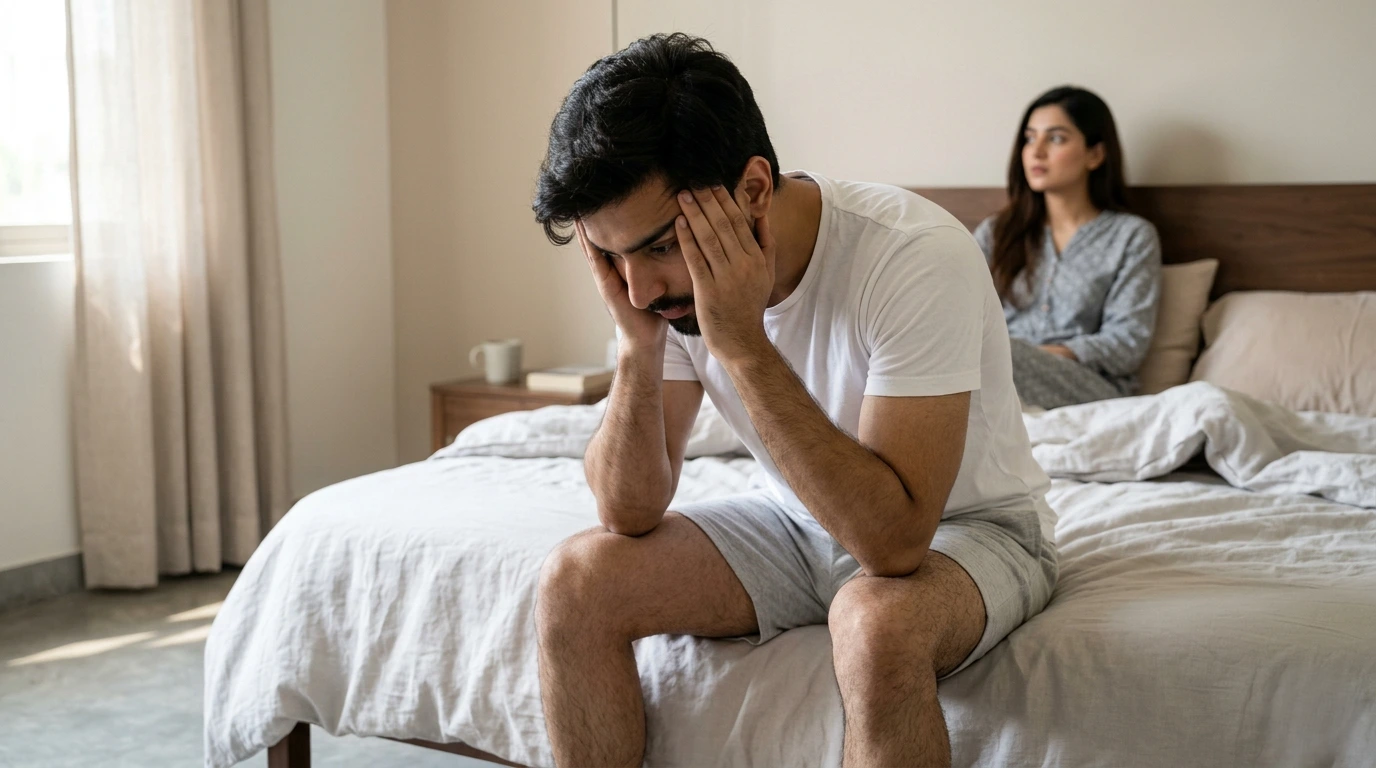
A lot of men experience a disappearance or loss of erection with condom, either when they’re putting it on, or immediately after it. This phenomenon is quite common, to the extent that around 14-37% of men experience it. In medical terms, this phenomenon is referred to as CAEP (condom-associated erection problems). Despite widespread occurrence, it can lower sexual confidence, cause stress, and induce anxiety around intimacy. That being said, it is important to know that this issue is often temporary and reversible with the implementation of correct methodologies.
There are a lot of factors that cause this issue. They can be widely categorized as physical, psychological, and situational factors. Physical factors include poor fit, diminished sensation, or temporary alteration in blood flow. Psychological factors include distraction, performance pressure, or anxiety around maintaining an erection. Situational elements, for instance, lubrication, type of condom, or positioning, can also exacerbate penis firmness and overall arousal. In many cases, men notice that their erection goes away after wearing condom because these physical and psychological elements converge at that exact transition point.
In this blog, I aim to help you understand why condom-associated erection problems occur, immediate practical steps you can take, sex therapy approaches for consistent difficulties, and signs that suggest a medical evaluation might be necessary. Since this issue can occur due to either physical, psychological, or situational elements or a combination of more than one element, men and couples will find it useful to understand the interplay of these elements. Along with this, it will also help them address the issue effectively and restore confidence in sexual activity.
What We Mean by Loss of Erection With Condom
CAEP or loss of erection with condom is a term used to describe the circumstances in which the penis either loses its firmness or becomes fully soft during the process of putting on a condom or shortly after it is worn, even though the penis was hard before. It is important to note that this issue does not occur throughout all sexual activity. Since it is limited to the application of a condom, the pattern is described as situational. Therefore, it is different from chronic erectile dysfunction. In chronic erectile dysfunction, the quality of erection is affected across multiple contexts, and often has broader medical causes.
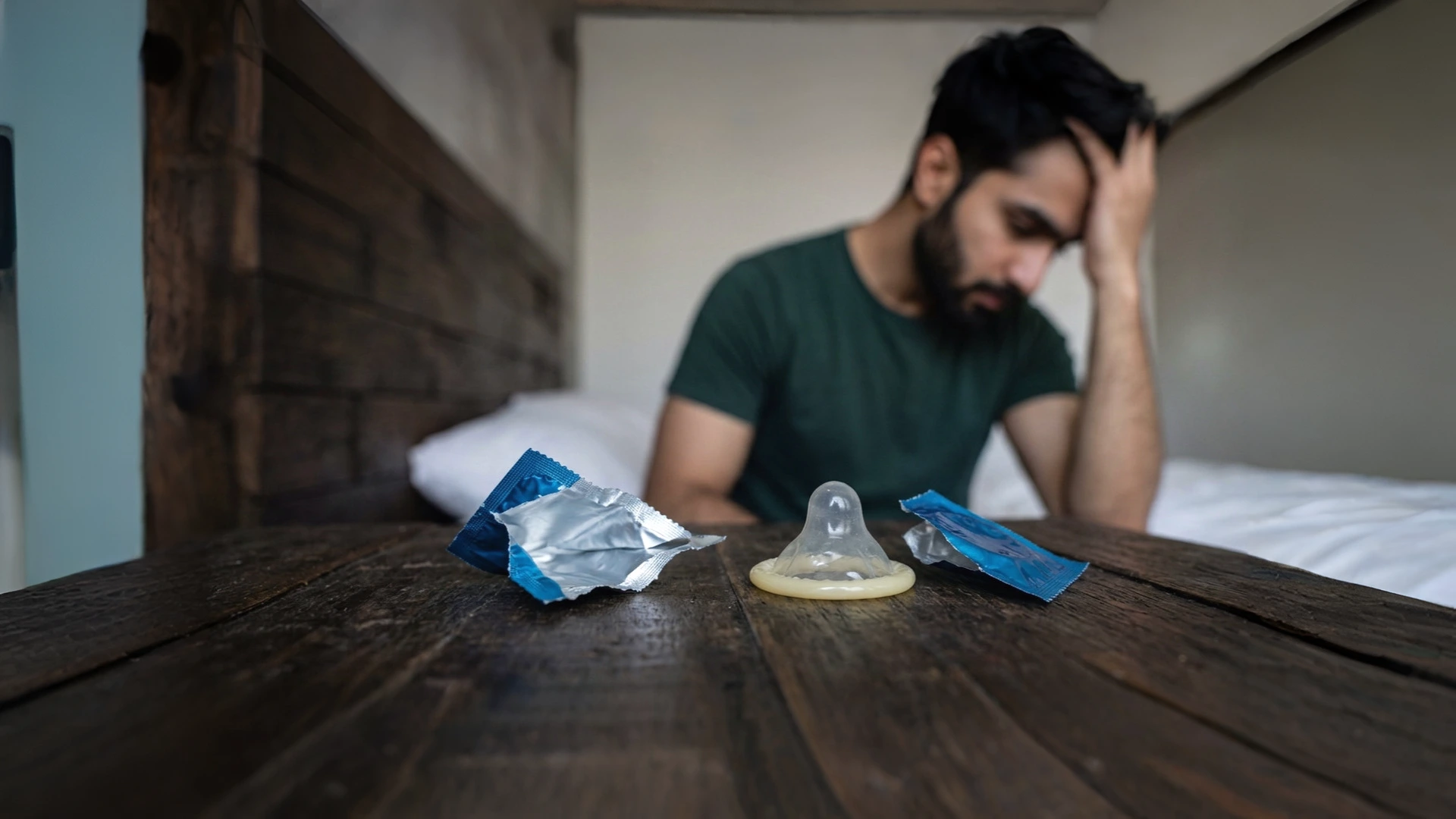
Timing is a key factor in people who lose erection after wearing condom. A rapid alteration in penis rigidity can occur due to disrupted arousal or blood flow, since putting on a condom requires a series of steps. These steps, i.e., opening the packet, pausing stimulation, adjusting the fit, and focusing on performance, can cause interruption leading to a loss of erection. In most cases, the sensitive portion is the moment of transition from stimulation to the application of a condom.
Having the knowledge that condom-associated erection problems (CAEP) are common and treatable can aid in the reduction of embarrassment and pressure that most men feel. In most cases, structured strategies, minute adjustments, or reassurance offered by a sex therapist can help resolve the issue. If couples understand this pattern, it becomes convenient for them to stay calm and work through the issue together.
How Erections Work And Why Some Men Lose Erection After Wearing Condom
Before getting into the details of why some men experience a loss of erection with condom, it is important to understand the mechanism behind erections. Sexual arousal initiates a chain of signals between the spinal cord, brain, and the pelvic region that leads to an erection. Smooth muscles are present inside the two chambers that run along the penis (referred to as corpora cavernosa). Upon sexual stimulation, chemical messengers are released by the nerves, which relax these smooth muscles. As these smooth muscles relax, blood flow in the arteries increases and fills these chambers. In the meantime, a compression of the veins that carry blood away from the penis occurs. This aids in the entrapment of blood inside, which leads to the maintenance of an erection.
This increased inflow and diminished outflow is a delicate process. Anything that minimizes physical sensation, interrupts stimulation, or creates tension can influence this process. For instance, the immediate attention shift, momentary pause to put on a condom, or sensation drop from the material out of which the condom is made may slightly reduce the signs of arousal. The penis can even get soft from mild anxiety, which triggers the tightening of smooth muscles again.
Knowing this physiology makes it easier for men to understand why their erection goes away after wearing condom. Instead of a permanent dysfunction, it is a momentary disruption in a process that requires consistent stimulation and relaxation.
Common Causes of Loss of Erection With Condom
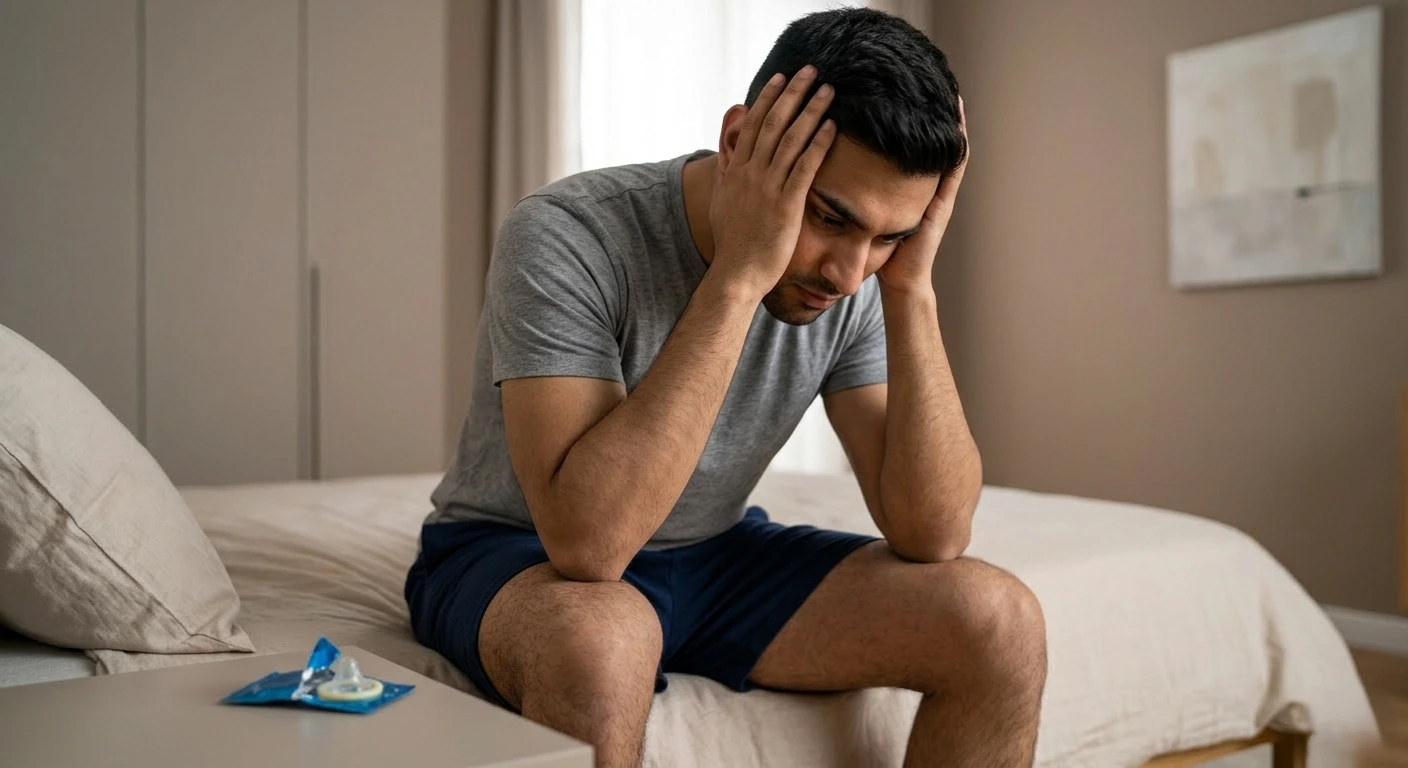
One of the most frequent contributors to loss of erection with condom is diminished sensation. A variety of condoms are available in the market that have been designed for specific purposes. The issue is when you use them without knowing the context behind why they were designed. For instance, a considerable reduction in stimulation can occur due to some condoms that have tighter latex or thicker material. These features can be a strong factor in the interruption of the erectile cycle for people who already depend on strong physical sensations and cues to stay hard.
The fit also plays a vital role. For instance, some condoms are too tight, which causes considerable pressure at the base of the shaft. This can result in a slight restriction of blood flow, which in turn can cause the sensation of a weak erection. On the contrary, the use of loose condoms comes with issues of its own. For instance, when you move during intercourse, a loose condom can reduce friction, which may make it harder to maintain an erection. Now you realize that there are tiny variations in the width of the condom or the material type that can cause a considerable impact on the feel of the condom.
Momentary variations in nerve or vascular activity may also be a factor. Dehydration, fatigue, overstimulation earlier during the day, or sometimes even minor irritation of the nerve from certain positions may also reduce rigidity in some cases. However, it is important to note that these are mostly short-lived and not a sign of chronic dysfunction.
If you are losing erection after using condoms across various partners and encounters, then it is worthwhile to get evaluated by a medical professional to rule out any underlying hormonal or vascular issues, as well as broader erectile dysfunction.
Psychological and Relational Factors
- Performance Anxiety: One of the strongest factors associated with condom-associated erection problems is performance anxiety. As soon as you start thinking, “I hope I don’t lose the erection this time”, the body can shift to monitoring mode from the previous arousal mode. There are various parasympathetic processes required to maintain an erection, and as soon as this mental pressure activates the stress pathways, it interferes with those parasympathetic processes.
- Distraction and Over-Thinking: A similar sort of role is played by distraction and over-thinking. Even a short pause required to open the wrapper and put in the condom may break the flow of arousal; the brain is a sensitive organ, and it reduces the erotic focus as soon as the attention shifts from sensation to self-evaluation. A softening in rigidity can also occur due to momentary cognitive interference. This is true especially in men who are already sensitive to concerns related to sexual performance.
- Partner Pressure and Relational Tension: Partner dynamics also play a major role. The fear of disappointing your partner, subtle tension, or previous negative reactions of partners can elevate performance anxiety. Even well-intentioned comments like “hurry up” or visible frustration of the partner may increase mental pressure. As time passes, they condition the brain to associate condoms with stress rather than pleasure.
How therapists address these patterns: Short structured interventions prove quite effective, often in therapy settings. Grounding methodologies aid in bringing attention back to physical sensation instead of internal monitoring. Similarly, cognitive reframing proves useful in targeting catastrophic thoughts and replacing them with realistic expectations. If there is relational tension, guided communication strategies help reduce the pressure and restore a sense of teamwork instead of a performance evaluation.
Situational Triggers and Practical Adjustments
Even though most of the condom associated erection issues are physical or physiological, there are still some specific momentary factors that can make these issues more likely. It is important to note that although these triggers are often subtle, they still affect arousal at a crucial stage. Some men assume they lose erection because of condom itself, when in reality it is the interruption or pressure around its use that disrupts arousal.
- Interruption of Sensory Input: Brief pauses in stimulation or abrupt position changes can reduce the momentum of erection. Continuous sensory input is required to maintain arousal. If stimulation abruptly stops while applying or reaching for a condom, rigidity can drop before the penetration even occurs.
- Condom Application Timing: A significant interference can also occur if you apply a condom too quickly, awkwardly, or without sufficient foreplay. In case the erection was not strong or stable beforehand, the momentary interruption required for condom application may be enough to soften the erection. A practical solution to this is the incorporation of condom application into foreplay instead of treating it like a technical interruption. This helps maintain the flow.
- Fit and Lubrication: As stated earlier, poor or insufficient condom lubrication is a common contributor. Overly tight or loose condoms may feel restrictive or reduce the sensation. Experimenting with thin materials, various sizes, or adding compatible lubrication can significantly enhance sensation and reduce the loss of erection during its use.
Brief adjustments in pacing, timing, and the condom choice can often resolve situational condom associated erection problems without the need for medical intervention.

When To Consider Medical Evaluation If You Are Losing Erection After Using Condoms
In the majority of cases, condom associated erection problems are only situational and can be fixed with practical adjustments. But there are certain patterns that indicate the need for medical evaluation. In these cases, simple trial-and-error alterations may not be enough. If you consistently lose erection after condom use and the same pattern begins to appear even without condoms, that shift suggests the issue may no longer be purely situational.
If the loss of erection occurs across various situations and partners, even without the use of a condom, then these are red flags. In addition to this, penile curvature, pain, and decreased stiffness in the penis are the factors that require your serious consideration. A review is especially warranted if you experienced a sudden onset of difficulties after starting new meds, especially blood pressure meds or antidepressants.
The screening process often starts with a detailed overview of your medical and sexual history, including the frequency, onset, and context of the issue. A medical professional may review your current medications and assess cardiovascular risk factors. If the patterns suggest metabolic or hormonal causes, relevant laboratory tests may also be conducted. They may also refer you to a urologist for further evaluation, such as Doppler imaging or vascular testing, if the difficulties are unexplained or repeated across various contexts.
The goal of this medical assessment is to rule out any underlying contributors and ensure that the advised treatment is targeted and effective.
Immediate, Practical Strategies to Try
A lot of men experience a significant reduction in condom-associated erection problems with a brief practical alteration. These strategies are designed to serve various purposes, such as the preservation of arousal, minimizing interruption, and lowering performance pressure during intercourse.
- Extend foreplay before applying a condom: Before reaching out and applying the condom, make sure that the arousal is stable and strong. Applying it when the erection is already firm decreases the chance that any minor drops in stimulation will result in softening. A significant help to momentum can also be provided by the incorporation of manual or oral stimulation either during the application of a condom or after it.
- Use breathing and grounding techniques: Try slow, diaphragmatic breathing. This can calm the nervous system and alleviate the stress that is often the source of interference with erection. Similarly, try bringing your attention back to the physical sensations rather than internal thoughts. This interrupts the constant loop of anxiety you’re caught in. Even 30-60 seconds of steady breathing can help reset arousal.
- Optimize condom fit and sensation: As mentioned earlier, experimenting with various condom sizes, thinner material, or additional lubrication may also help in the reduction of friction, which can result in the improvement of sensation. Ask yourself this. Does the condom feel properly fitted and secure, or does it feel constrictive? By adding a tiny amount of lubrication inside the tip of the condom and sufficient lubrication outside, you can enhance the stimulation and comfort.
- Communicate calmly with your partner: Performance anxiety worsens with pressure, blame, or the partner’s silence. Brief communication, relevant to the fact, can normalize the situation and reduce stress. The body is more likely to respond positively if both partners treat the issue as a practical adjustment rather than just the failure of one partner.
Short-Term Therapeutic Techniques (Sex Therapist Approach)
If CAEP persists across various contexts, there are a few structured therapeutic methodologies that can break the cycle. These are skill-based, practical approaches, designed to decrease performance anxiety and rebuild reliable, sustained arousal.
- Sensate Focus Exercises: This strategy focuses on removing the goal of penetration. Instead of penetration, partners focus only on sensations, touch, and physical awareness rather than trying to perform. Initially, condoms are not introduced. Once arousal is consistent and comfort returns, a condom can be introduced. The strategy, therefore, decreases the automatic link between performance activity and condom use.
- Gradual Exposure: Rather than going straight for penetration with a condom, the condom is introduced during non-demanding stages. For instance, wearing it without intending to have sexual intercourse or during manual stimulation. This helps train the body that condoms are not associated with pressure or failure. As a result, this graded condom exposure diminished anticipatory anxiety.
- Cognitive Reframing: Therapy challenges certain rigid internal scripts, such as “If I lose it once, it means something is wrong,” that men often develop. The goal is to normalize temporary fluctuations and replace certain catastrophic thoughts with realistic ones. This helps reduce the activation of the sympathetic nervous system, which directly supports erection.
- Couple Communication Coaching: Even when unspoken, performance pressure still often exists between partners. During coaching, couples are trained to respond calmly in case of an erection fluctuation. This helps shift the focus from evaluation to collaboration. Arousal stabilizes with ease when both partners treat the use of a condom as a shared adjustment.
A noticeable improvement in CAEP is observed within a few weeks. However, a key factor here is repetition without any external pressure.

Medical or Interventional Options (When Needed)
As stated earlier, in the majority of cases, loss of erection related to condom use is situational and can be improved with behavioral adjustments. However, there are cases in which the problem is persistent and overlaps with broader erectile difficulties. In these cases, medical options can be considered under the supervision of a medical professional.
- Medications: You may have heard of certain medications like Sildenafil, Tadalafil, or Vardenafil. These are PDE5 inhibitors. They support the pathways of nitric oxide, which in turn enhance the blood flow to the penis. This results in the revival of confidence and improvement in overall erection quality and persistence. However, it is important to note that timing-specific condom-associated erection issues may not be fully related to medicines since they are often driven by anxiety and sensation shifts. In the majority of cases, the meds work best when they are combined with behavioral strategies.
- Topical Support Options: In some cases, non-prescription topical approaches such as Mythica Oil may be considered as supportive options. These are typically used to improve local blood flow, sensitivity balance, and overall confidence during intercourse. They are not a replacement for medical treatment but can complement behavioral strategies, particularly in men experiencing situational erection difficulties.
- Workup for Vascular or Hormonal Issues: If the loss of erection is persistent across various contexts and partners. A further evaluation is often warranted. In these cases, you may be referred to a urologist. They often assess various factors like testosterone levels, metabolic markers, cardiovascular risk factors, or recommend certain vascular tests such as penile Doppler imaging. Erection can be subtly influenced by systemic conditions like hormonal imbalances or early vascular alterations.
- Coordination With Other Specialties: Due to the fact that erections are closely related to metabolic and cardiovascular health, certain underlying conditions like diabetes, cardiac disease, or high blood pressure may need to be addressed before the initiation of medication. There are some cases in which adjusting the doses or prescription of certain medications that affect sexual functions can prove really helpful.
With the majority of the cases associated with erectile dysfunction with condoms, medical intervention is not the first step. However, it becomes necessary when the symptoms are broad, persistent, or accompanied by other conditions.
Practical Next Steps
- Track Patterns Before Jumping to Conclusions: Observe instead of straightaway assuming that there is something wrong with you. Check the type, fit, and lubrication of/in the condom. Note the time when you wear it, your arousal level before it, and if stiffness is affected by position alterations. Make a note of partner dynamics and overall level of comfort. Patterns start to emerge in a few instances when you start objectively observing.
- Make One Adjustment at a Time: Instead of changing everything, try to make one change at a time. Try thinner or better-fit condoms, and add lubrication inside the condom to reduce friction. I also recommend that you wear it a little earlier rather than waiting until penetration. Make sure you stick with one variation and try it for at least 3-4 weeks instead of moving on to the next recommendation or judging the results. Be patient since consistency matters more in these cases than quick fixes.
- Strengthen Arousal Stability: Most of the condom associated erection problems occur when you wear the condom at a moment when the erection is not strong enough. Wait and let the arousal build slowly. Focus on enhanced stimulation and keep your mind away from pleasure rather than trying to prove something. This is where the performance anxiety jumps in. Keep your mind on the sexual experience while wearing the condom. This helps prevent erectile dysfunction.
- Seek Evaluation If It Persists: If the loss of erection is happening across various contexts, sexual partners, and situations, and if there is a reasonable reduction in morning erections, then I would recommend you consult a medical professional. This will help you rule out the underlying vascular, hormonal, or medication-induced factors, which is better than guessing.
- Consider Structured Therapy if Anxiety Is Involved: The issue can turn into a psychological loop if somehow it gets linked to fear or the anticipation of erectile dysfunction. In these cases, consulting with a sex therapist can help break that cycle of interruption. They will guide you through structured and targeted interventions that are specific to the sort of issue you are facing. The goal here is to identify the underlying psychological factors that are playing a part and to overcome them. Early intervention and treatment help overcome this cycle faster. Waiting around on it just conditions the brain and does not solve anything.
FAQs
- Why do I keep losing sensation with condom?Losing sensation with a condom is often associated with tightness, thickness, and dryness. Try switching to thin condoms or adding lubrication to improve responsiveness.
- How to overcome condom anxiety?You can overcome condom anxiety by normalizing condom usage during foreplay rather than causing a disruption while wearing it during penetration. Try communicating with your sexual partner and practicing beforehand to overcome this anxiety.
- Why do condoms kill the mood?Condoms can kill the mood in some men due to the interruption that happens while wearing the condom. Try keeping mental and physical stimulation alive while wearing the condom to overcome the issue.
- Why do condoms make me lose my erection?This usually occurs due to mental pressure and sensation alteration. Moving towards a better-fitted condom and maintaining mental and physical stimulation to reduce the drop in erection.
- What is condom collapse syndrome?This refers to loss of erection while wearing a condom. It is a pretty frustrating experience and results in diminished sensation and confidence. If you are going through it, try switching to thinner condoms, better fits, or adding lubrication to improve responsiveness.
- Can condoms prevent an erection?No, condoms do not prevent erections on their own. However, in some cases, diminished sensation, stress, or distraction while wearing condoms can affect the arousal and result in an erection loss.
- Why do I lose sensation when I wear a condom?Certain sorts of condoms have textures that diminish sensation and feel tight. Whereas in other cases, certain condoms lack lubrication. These are some of the reasons that can reduce sensation and result in a drop in erection.
- How to keep erect with a condom?Try wearing thinner condoms, picking the size, using sufficient lubrication, and staying engaged sexually while wearing the condom. Try wearing condoms outside of high-pressure instances. This can help enhance confidence and firmness.
- What are three side effects of using condoms?Some of the common concerns often aired about the use of condoms include diminished sensation, momentary loss of erection, and disruption in mood. This happens because the process often involves a transition and causes an interruption. Some individuals also suffer from irritation due to latex sensitivity.
- Why do I keep losing erection with condoms?In most cases, this happens due to diminished sensation, performance anxiety, and stress during the transition to the process of condom application. Some fixes include adjusting the texture, fit, and maintaining arousal through mental and physical stimulation while wearing the condom.
- What are the best condoms for erectile dysfunction?If you are experiencing condom-associated erectile dysfunction, try using condoms that are thinner, properly fitted, and of different textures. Each individual is different, and what works best for one might not be the best for all. So, experimentation with different sorts of condoms is necessary to pick which condom is the best for you.
- Using condoms can cause erectile dysfunction. True or false?Condoms do not directly cause erectile dysfunction. However, in some men, they can result in situational erection difficulties.
Author: Dr Tahira Rubab Hafeez
Call for appointments at +923111714470